How Local Businesses Can Reduce Food Waste and Increase Revenue
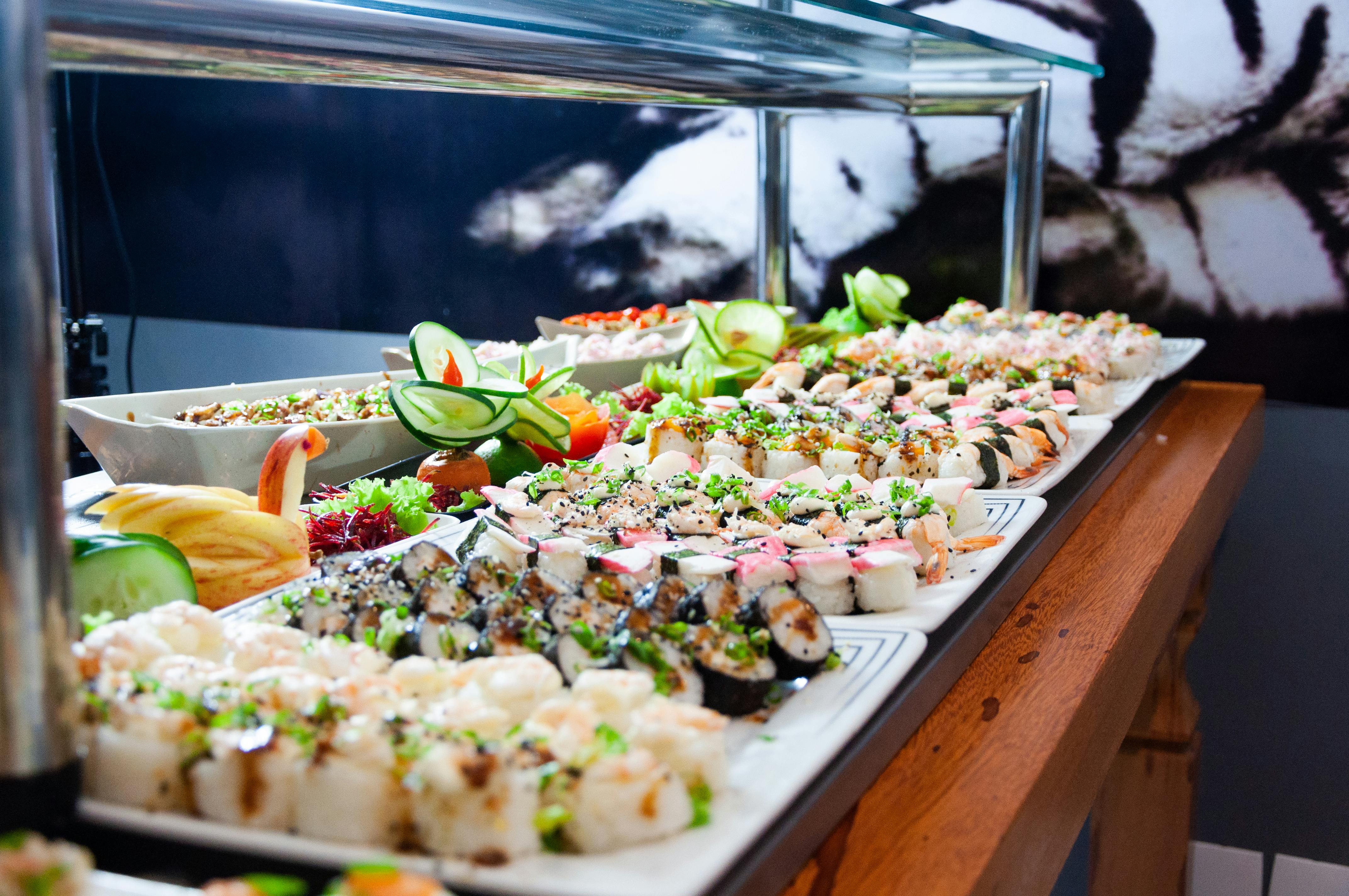
For a Caribbean food business, food waste is not an environmental abstraction. It is unsold inventory, paid for in foreign exchange, costing labour to prepare and disposal fees to discard. Across Jamaica, Trinidad and Tobago, Barbados, the Bahamas and the OECS, the average food service operator throws away between 4 and 25 percent of what they purchase - and almost none of it is unsafe, spoiled or impossible to sell.
This guide is a practical playbook for cutting that loss. It is written for the owner of a roti shop in San Fernando, the manager of a fast food franchise in Half Way Tree, the head chef of a hotel in Holetown and the owner of a patty shop in Spanish Town. The tactics are tested. The order is roughly easiest to hardest. You do not need a sustainability consultant to start - you need a notepad, a kitchen scale and four weeks.
Why this matters for revenue, not just sustainability
The Caribbean food service margin is thin. After cost of goods, labour, rent, utilities and the cost of running a business in a high-import economy, most independent restaurants operate at single-digit net margins. A 6 percent food waste rate, in that environment, is the difference between a profitable year and a marginal one.
Reducing food waste does two things at once. It cuts the cost of goods directly - less food bought for the same volume sold - and it opens a new revenue stream from surplus that does get produced. Most operators find that the second is the easier win in the first three months: existing surplus, sold at a discount, becomes recovered revenue without any change in operations.
Step 1: Run a one-week waste log
You cannot reduce what you do not measure. The single most useful action a Caribbean food business can take this month is a seven-day waste log.
Set a bucket near the bin. For one week, every item discarded gets weighed (or counted if weighing is impractical) and recorded with two pieces of information: the item and the reason for waste. Reasons usually fall into four buckets - spoilage in storage, prep waste, plate waste from customers, and end-of-service waste.
At the end of the week you will know, with no guesswork, where your money is going. For most Caribbean operators, the biggest line is end-of-service waste - food that was prepared in anticipation of sales that did not happen. That is also the easiest category to recover with surplus rescue.
Step 2: Tighten the prep forecast
Once you know the volume of end-of-service waste by day of week, you can adjust prep. In most Caribbean restaurants, the prep numbers are inherited from when the business opened and have never been revisited. Customer flow has changed. The numbers have not.
Adjust prep targets by 10 to 15 percent down on consistently low days. If Mondays consistently produce surplus, prep less on Mondays. If the weekend brunch rush ends earlier than the kitchen has been planning for, push the prep stop time back by half an hour.
The risk of under-prepping is well understood - running out of an item, losing a sale, disappointing a customer. The risk of over-prepping is invisible and continuous. The math almost always favours slightly less prep with a small top-up batch protocol than the legacy big-batch approach.
Step 3: Move from purchase orders to demand-based ordering
In many Caribbean kitchens the supplier order list is fixed: every Tuesday and Friday, the same boxes of chicken, the same bags of rice, the same crates of vegetables. That cadence creates over-ordering by default. By Friday, what was over-ordered on Tuesday is degrading in the walk-in.
The fix is to base orders on sell-through data. Many Caribbean POS systems can produce sell-through reports; if yours cannot, a simple paper count at end of service gives you the same information. Order enough to cover sales through the next delivery plus a 15 to 20 percent buffer for surprise demand. That is it.
Step 4: Standardise portions
Plate waste in Caribbean full-service restaurants is often a portion problem, not a customer problem. Generous portions are a regional tradition and a competitive advantage, but the difference between a generous portion and a wasteful portion is often 50 to 75 grams of food per plate.
Standardise portions with a scoop, a portioning utensil or a marked ladle. Train every line cook to plate to the standard. Measure the difference in plate returns for a month. The reduction in plate waste, multiplied across thousands of covers, is meaningful.
Step 5: Build an end-of-day surplus protocol
This is the single highest-impact tactic for most Caribbean food businesses. At a defined point near closing - typically 60 to 90 minutes before - designate one staff member to assess what will not sell.
That staff member packages surplus into standard bags (a defined number of items, or a defined weight), photographs the bag if needed, and lists it on a surplus rescue platform like Last Bite. Customers reserve and pay through the app, then arrive during the pickup window to collect. The kitchen does not negotiate price or count cash. Staff do not handle individual marketing.
The whole process, once routine, takes 5 to 10 minutes per day. For a typical Caribbean fast food outlet or independent restaurant, this routine recovers between 3 and 8 percent of monthly revenue that would have been a write-off.
Step 6: Use surplus as a customer acquisition channel
Surplus rescue is not just revenue recovery. It is one of the best customer acquisition channels available to a Caribbean independent food business, because it brings customers in at a low-risk price point and lets them experience your food.
Treat surplus customers like new customers, not discount customers. Pack the bag with care. Include a small handwritten card if the volume allows. Make sure the bag represents the food you would want them to come back for at full price. Most surplus buyers will pay full price within three to six visits if the experience is good.
Step 7: Repurpose surplus into menu items
Caribbean cuisine is built around stretching ingredients. Use that tradition deliberately.
End-of-day roast chicken becomes the next morning's chicken sandwich special. Day-old hardo bread becomes the bread pudding on the dessert menu. Vegetables that are too soft for the salad station go into the soup of the day. Each one of these moves takes food that would have been wasted and re-enters it as a new full-margin menu item.
The trick is to plan the repurpose into the menu cycle, not improvise it. Have a known "use-up" dish on every menu category, and rotate the inputs based on what the kitchen actually has.
Step 8: Train staff on waste consciousness
The biggest single multiplier on every tactic above is the kitchen team understanding why. Caribbean kitchen teams are often deeply experienced and proud of their craft. When the conversation is framed around "waste" in the abstract it tends to feel like criticism. When it is framed around margin, around shifts being more profitable, around the business being able to afford raises, the engagement is much higher.
Share the weekly numbers with the team. When waste drops, share that. When recovered surplus revenue grows, share that. Treat the team as partners in the solution and the numbers move much faster.
Step 9: Donate what cannot be sold
Not all surplus can be sold. Items that are end-of-life on the shelf, or that exceed the daily surplus volume, can be donated. Across the Caribbean there are growing networks of food rescue charities, faith-based feeding programmes, and homeless shelters that accept donations of safe, prepared food.
Donation has tax and reputational benefits in most jurisdictions, and in all of them it is the right thing to do. Build relationships with one or two local recipients and standardise a weekly handover protocol.
Step 10: Track and report
Pick three numbers and track them weekly:
- Total food waste in kg or units.
- Recovered surplus revenue.
- Cost of goods as a percentage of food sales.
Over six months you will see all three move. Total waste should drop. Recovered surplus revenue should grow then stabilise. Cost of goods as a percentage of food sales should fall by 1 to 3 percentage points, which on most Caribbean restaurant P&Ls is the difference between a tight year and a comfortable one.
A sector-by-sector starting point
Fast food and quick-service: Start with end-of-day surplus bags. The supply is predictable, the customer demand is high, and the integration into operations is minimal.
Independent full-service restaurants: Start with the waste log and prep tightening. Then layer in a daily surplus bag.
Bakeries and patty shops:Start with a morning-after donation protocol for the previous day's unsold stock, plus a surplus bag at end of business.
Supermarkets: Start with a near-expiry markdown station and a surplus bag of bakery, deli and produce items at end of day.
Hotels and all-inclusive resorts: Start with a buffet portion audit. Then build a staff-meal repurpose protocol for items that cannot be re-served. Then a surplus bag for external sale where local regulations permit.
What Last Bite can do for your business
Last Bite is a Caribbean-built platform that handles the customer side of surplus rescue end to end. You list what you have at the end of service, customers reserve and pay through the app, and they arrive during your defined pickup window. No cash handling, no negotiation, no marketing burden. We also provide the analytics so you can see your recovered revenue per location, per week, and over time.
If you would like to be part of the launch - and have your input shape how the platform works for Caribbean food businesses - take the short survey linked below. It feeds directly into our quarterly Food Waste paper, which we share with participating businesses.
Read more on the for businesses page, or take the survey above to register your interest.