What Is Food Surplus And Why Does It Matter?
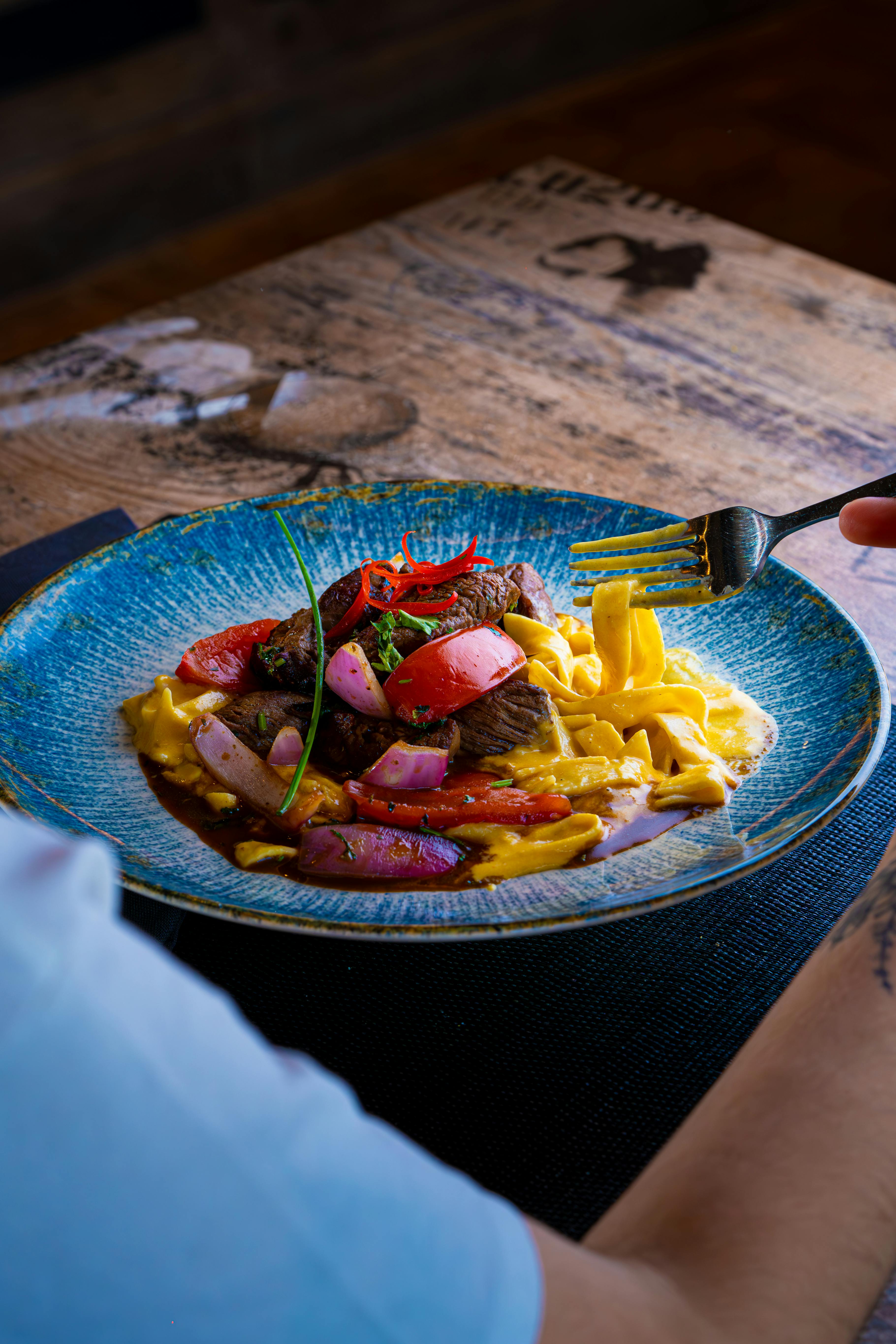
Walk past any Kingston bakery at 7pm, any Port of Spain doubles vendor by mid-afternoon, or any all-inclusive resort buffet in Negril after lunch service, and you will see the same thing: trays of perfectly good food destined for the bin. That food is not waste yet. It is food surplus - and what happens to it in the next few hours decides whether the Caribbean loses another meal or recovers it.
This guide explains what food surplus actually is, how it differs from food waste, why it matters specifically in the Caribbean context, and what restaurants, supermarkets and households across Jamaica, Trinidad and Tobago, Barbados, the Bahamas and the wider region can do about it. Whether you run a roti shop in Chaguanas, a hotel kitchen in St. Lucia, or simply want to stop throwing away callaloo at home, this is the starting point.
Food surplus, defined
Food surplus is edible, good quality food that has been grown, produced, prepared or stocked but is not sold or consumed within the window it was made for. It is still safe. It is still nutritious. It just has not found a plate yet. In a Caribbean restaurant this looks like the curry goat, oxtail or jerk chicken left in the bain-marie at closing. In a supermarket in Bridgetown it looks like the loaf of hardo bread on its last day of shelf life. In a school cafeteria in Spanish Town it looks like the trays of food prepared for students who stayed home with the flu.
The key word in that definition is edible. Food surplus is not spoiled, expired or unsafe food. It is the inventory that businesses produced in good faith, that customers did not buy in the expected volume, and that is now sitting at the boundary between rescue and the landfill.
Food surplus vs food waste: the difference matters
These terms get used interchangeably, but they describe two different stages of the same problem.
Food surplus is the moment of opportunity. The food still exists. It is still safe. Someone can still eat it.
Food waste is what happens when that surplus is thrown into a skip and trucked to a landfill like Riverton in Kingston, Beetham in Port of Spain or Mangrove Pond in Bridgetown. Once it crosses that line, it stops being a meal and starts being a problem - a source of methane, a strain on municipal services, and a financial loss for whoever paid to produce or import it.
The distinction matters because the solutions are completely different. Reducing food waste means dealing with what is already in the bin: composting, anaerobic digestion, animal feed. Rescuing food surplus means intercepting before the bin: discounted sales, donation, redistribution, surprise bags. Both matter. But surplus rescue is more valuable because it keeps the food in human nutrition where it was always meant to go.
Why food surplus is uniquely important in the Caribbean
The Caribbean has a food story that no other region quite matches. According to the Caribbean Community (CARICOM), the region imports between 60 and 80 percent of the food it consumes. The annual food import bill across CARICOM states is in the region of US$6 billion. Every callaloo patty, every box of imported chicken, every loaf of bread that ends up in the bin represents foreign exchange that the Caribbean cannot afford to lose.
At the same time, the region has one of the world's highest exposures to climate risk. Hurricanes are getting stronger. Coral bleaching is destroying fisheries. Droughts are squeezing local farming on islands like Antigua and St. Kitts. Food waste makes all of this worse: when food rots in landfills it releases methane, which is roughly 80 times more potent than carbon dioxide over a 20-year horizon. A region that is on the front line of climate change has the strongest possible case to stop wasting food.
Layered on top of that is a tourism economy. Across Jamaica, the Dominican Republic, the Bahamas, Aruba and the Eastern Caribbean, hotels and resorts produce enormous volumes of surplus food every day from buffets, banquets and room service. The Caribbean Hotel and Tourism Association has flagged food waste as one of the largest controllable costs in the hospitality sector. Surplus food management is not a niche sustainability issue here - it is a margin issue.
Where food surplus comes from
Most people picture food waste as plate scrapings in a household kitchen. The reality is broader. Surplus shows up at every link in the food chain:
- Farms: Mangoes, breadfruit, sweet potatoes and other ground provisions that are cosmetically imperfect and rejected by exporters or supermarkets.
- Distributors: Pallets of imported produce that arrive bruised at the Kingston Container Terminal or the Port of Spain wharf and cannot be sold at full margin.
- Supermarkets: Bread, dairy, ready-meals and produce approaching their best-before date.
- Restaurants and fast food outlets: Hot meals prepared for an expected service that does not fully materialise. KFC, Burger King, Popeyes and local quick-service chains across the region all report this as a daily challenge.
- Bakeries and patty shops: Beef patties, coco bread, hardo bread, hops bread and pastries left at end of day.
- Hotels and all-inclusive resorts: Buffet items that have been out for service and cannot be re-served the next day under HACCP rules.
- Households: Leftovers, half-used vegetables, expired pantry items.
In every one of these settings, surplus exists for a few hours before it becomes waste. That is the window where rescue is still possible.
Why food surplus matters for businesses
For a fast food franchise, a small bakery or a hotel kitchen, food surplus is not just an ethical question. It is a profit-and-loss question. Every patty that is binned has already been paid for: the flour, the beef, the labour, the energy to bake it, the staff time to package it. The cost is sunk. If that patty is sold for half price as part of a surprise bag, that is recovered revenue. If it is thrown away, that is pure loss plus disposal cost.
In a typical Caribbean quick-service restaurant, surplus rescue can recover between 3 and 8 percent of monthly revenue that would otherwise be written off as waste. For a small independent restaurant in Bridgetown or St. George's with thin margins, that can be the difference between an unprofitable month and a profitable one. For a hotel in Montego Bay or Punta Cana, the same logic applies at a much larger scale.
Surplus rescue also creates a new customer acquisition channel. People who buy a surprise bag at half price often return as full-price customers, particularly if they are discovering a restaurant or bakery they had not tried before. In a competitive market like Caribbean food service, that matters.
Why food surplus matters for households
The cost-of-living squeeze across the Caribbean is real. Food inflation in Jamaica, Trinidad and Tobago, Barbados and most of the OECS has been running well above general inflation since 2022. For a household in Mandeville or San Fernando trying to feed a family on a fixed income, every extra dollar matters. Buying surplus food at 50 to 70 percent off retail is one of the few practical ways to stretch a grocery budget without compromising on quality.
Beyond the wallet, household engagement with food surplus changes how people think about food. Once you start eating surplus, you start noticing how much your own household throws away. That feedback loop is one of the most powerful drivers of reduced household food waste in any country where surplus rescue has taken hold.
Why food surplus matters for the planet
Globally, the United Nations Environment Programme estimates that food waste accounts for around 8 to 10 percent of all human-caused greenhouse gas emissions. If food waste were a country, it would be the third largest emitter after China and the United States. In the Caribbean, where most landfills are open dumps with poor methane capture, the climate impact per tonne of food wasted is even higher than the global average.
Rescuing surplus food is, kilo for kilo, one of the most cost-effective climate interventions available. There is no new technology required. There is no infrastructure to build. The food already exists. All that is needed is a way to connect supply with demand before the food becomes waste - which is the entire premise of a surplus food platform.
Common myths about food surplus
Myth 1: Surplus food is lower quality. It is not. It is the same food the business was selling at full price earlier. A patty from a surplus bag at 6pm came out of the same oven as the patty sold at 11am.
Myth 2: Selling surplus cannibalises full-price sales. The data does not support this. Customers who buy surplus bags typically do so opportunistically. They are not the same customers who would have bought full price at peak service. Surplus rescue adds revenue; it does not replace it.
Myth 3: Selling surplus is a food safety risk. Caribbean public health regulations, including those administered by the Ministry of Health and Wellness in Jamaica and equivalents across the region, allow the sale of food within its safe shelf life regardless of price. Surplus food is sold within its safe window. The risk profile is identical to full-price food.
Myth 4: It is a hassle to manage. With a digital platform, the workflow is: at the end of service, staff weigh or count what is left, list it in the app, and customers collect during a defined pickup window. The whole listing process takes about three minutes per day.
How Last Bite is approaching food surplus in the Caribbean
Last Bite is building a Caribbean-focused platform that connects food businesses with customers who want to buy unsold, high quality food at a discount. The model is simple. Businesses list what they have left at the end of service. Customers see what is available near them in Kingston, Port of Spain, Bridgetown or wherever they are, pay through the app, and pick up during a defined window. The business recovers revenue, the customer gets a meal at half price or less, and the food stays out of the landfill.
The platform is also being designed with Caribbean-specific realities in mind: intermittent power, mobile money, informal vendors and the central role of small independent businesses. Surplus rescue cannot be a one-size-fits-all model imported from Europe. It has to fit how the Caribbean actually trades food.
Frequently asked questions
What is the meaning of food surplus? Food surplus means edible, good quality food that has been produced or stocked but is unsold or unused, and is at risk of becoming waste.
Is food surplus the same as expired food? No. Food surplus is food within its safe-to-eat window. Expired food is past that window. Surplus rescue happens before expiry.
Can supermarkets in the Caribbean sell surplus food legally? Yes. Food that is within its labelled best-before or use-by date can be sold at any price.
Where does most food surplus in the Caribbean come from? The largest single source is the hospitality sector - hotels, all-inclusive resorts, restaurants and quick-service chains - followed by supermarkets, bakeries and households.